Session Ratings
A feedback loop that helps customers measure and improve.
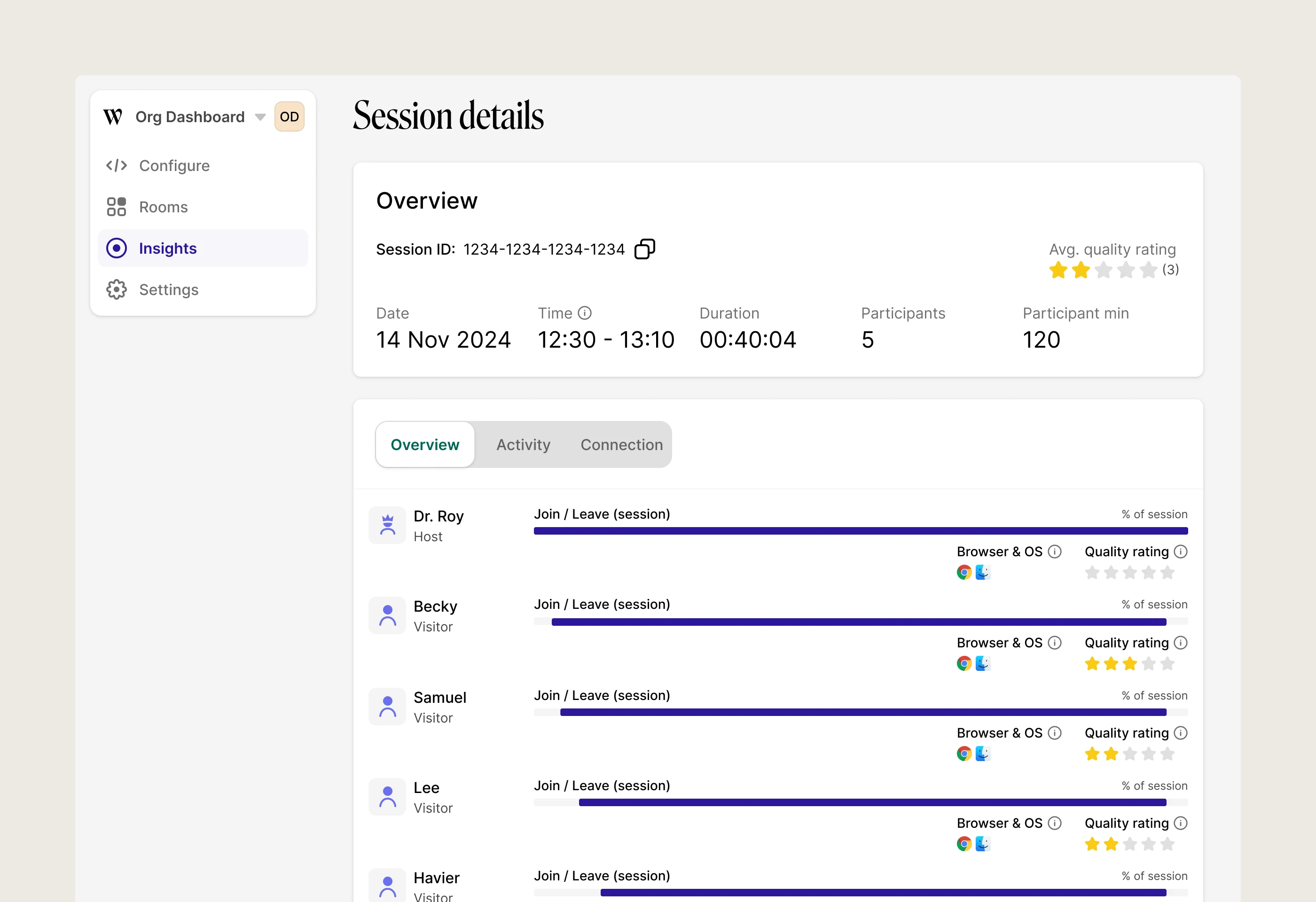
Whereby provides the simplest way to do video calls. It's like Zoom, but you just click an invite and it opens the session in your favourite browser. The embeddable product enables companies to build video calls directly into their own environment or app so it feels connected with their service.
Session Ratings gives those customers a lightweight feedback loop. It turns a gut feeling into something they can measure and improve.
I led design across the discovery, the rating mechanic, and the dashboard customers use to analyse the feedback.
Solve the Pattern
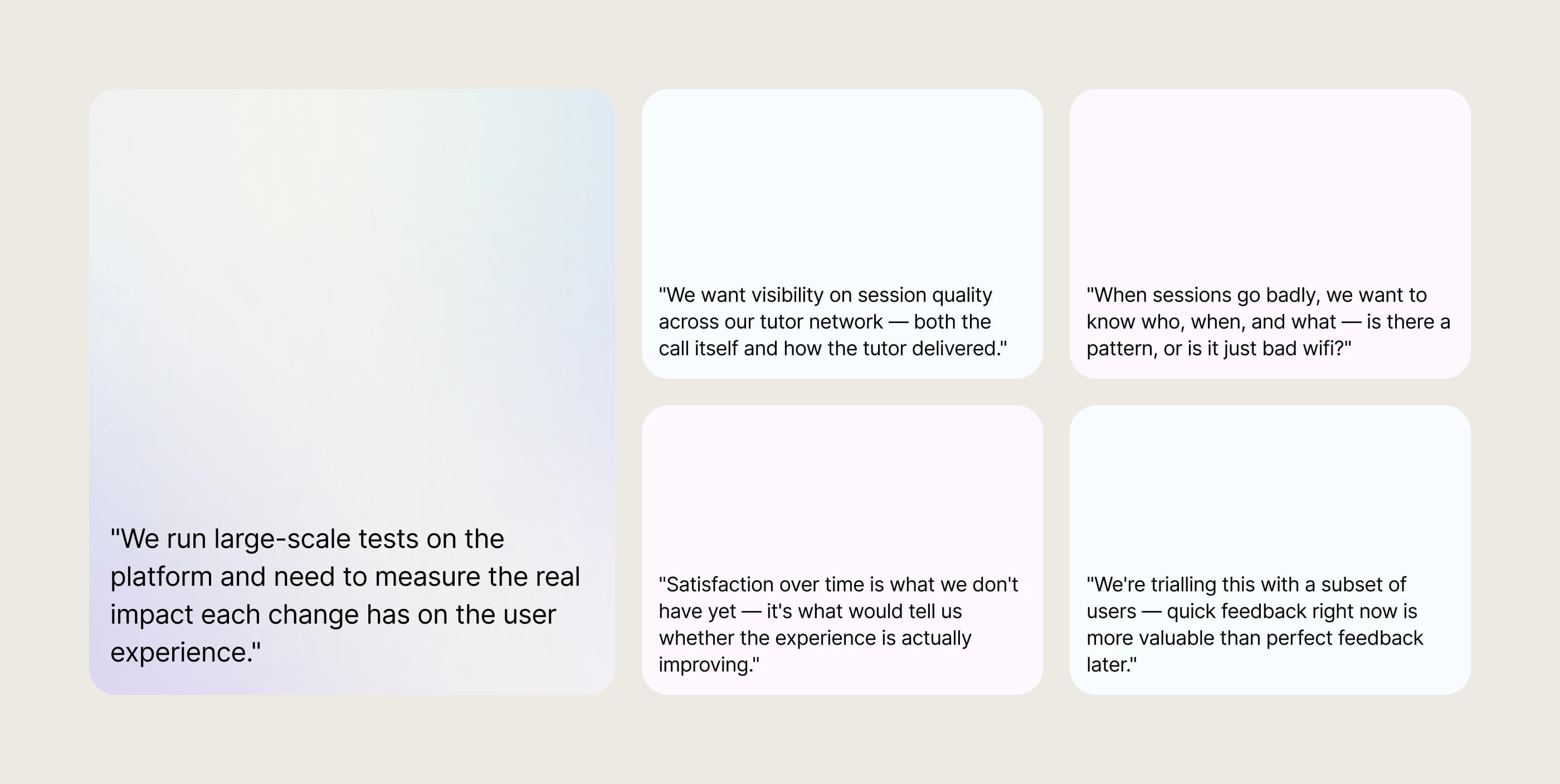
It started with one customer. They wanted to know which participants had likely hit technical issues, and on which calls. Before building anything, I stepped back to see how common the need really was. The more I looked, the more the need turned up — just worded differently each time.
Some providers wanted to watch call quality. Others cared about host performance. A few wanted to run A/B tests, and prospects could use an out-of-the-box mechanic while trialing Whereby. Different asks, one underlying need: a read on how their sessions are going. So I designed one mechanic flexible enough to serve all of them.
Lopsided on Purpose
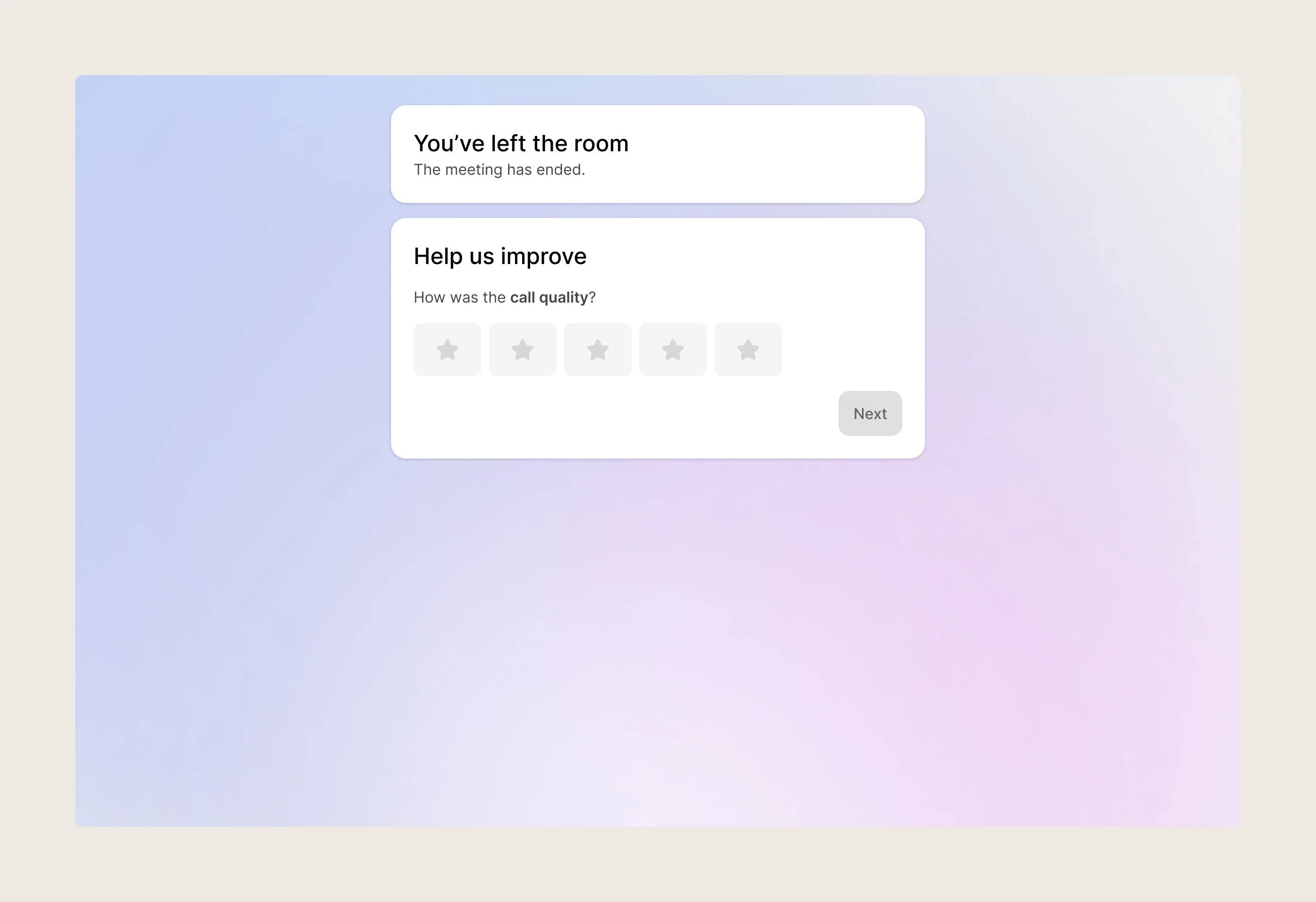
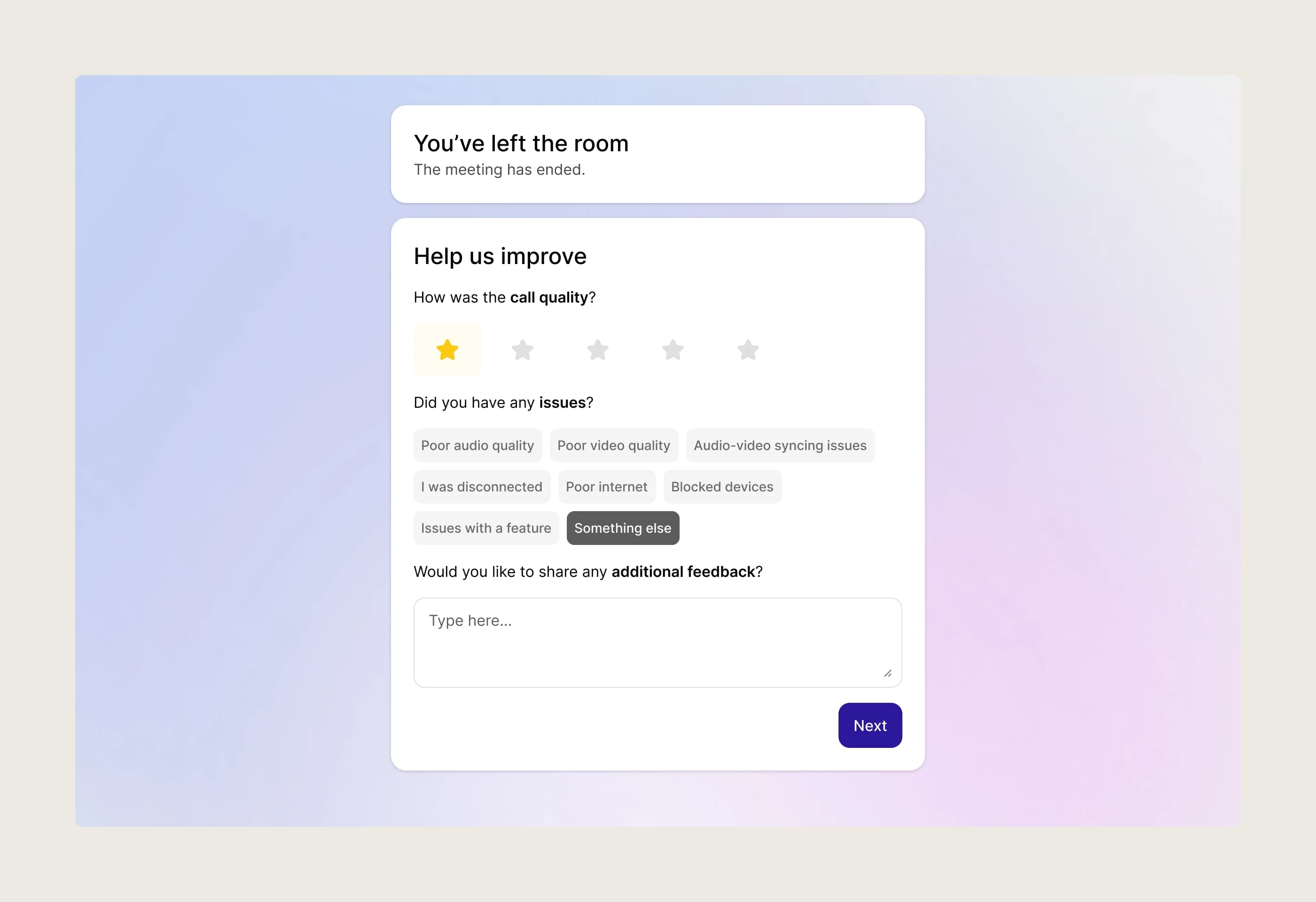
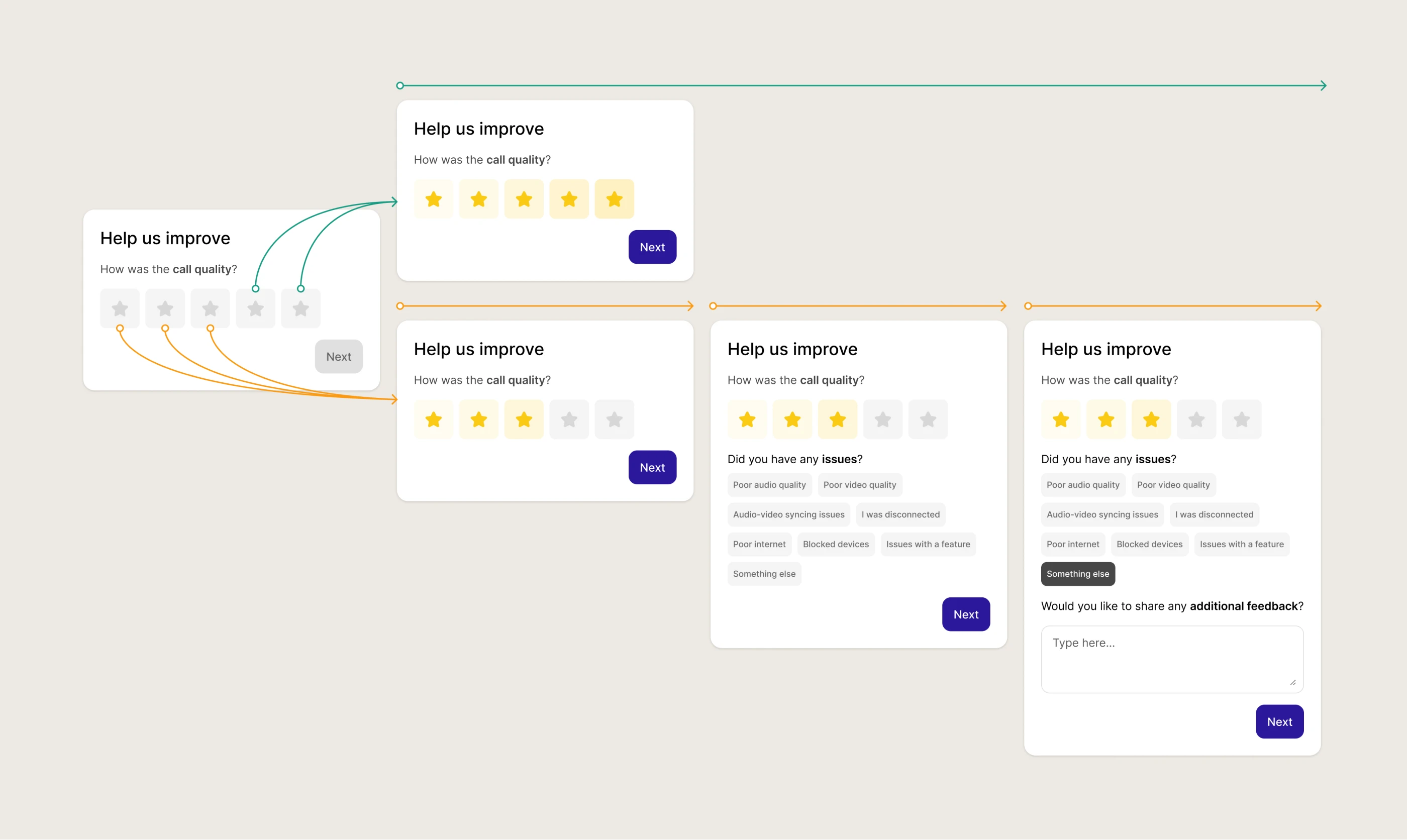
Stars felt more appropriate than emojis, but more engaging than plain text. For the meeting contexts Whereby serves they were the happy medium and something customers later confirmed. The scale took a bit more conversation. It had to tell customers something while staying simple for users. At ten, people couldn't tell each steps apart, at three, customers weren't getting enough value. To help conversion, I gave the stars a pop of colour and a little motion — engaging enough to invite interaction but quiet enough to stay out of the moment.
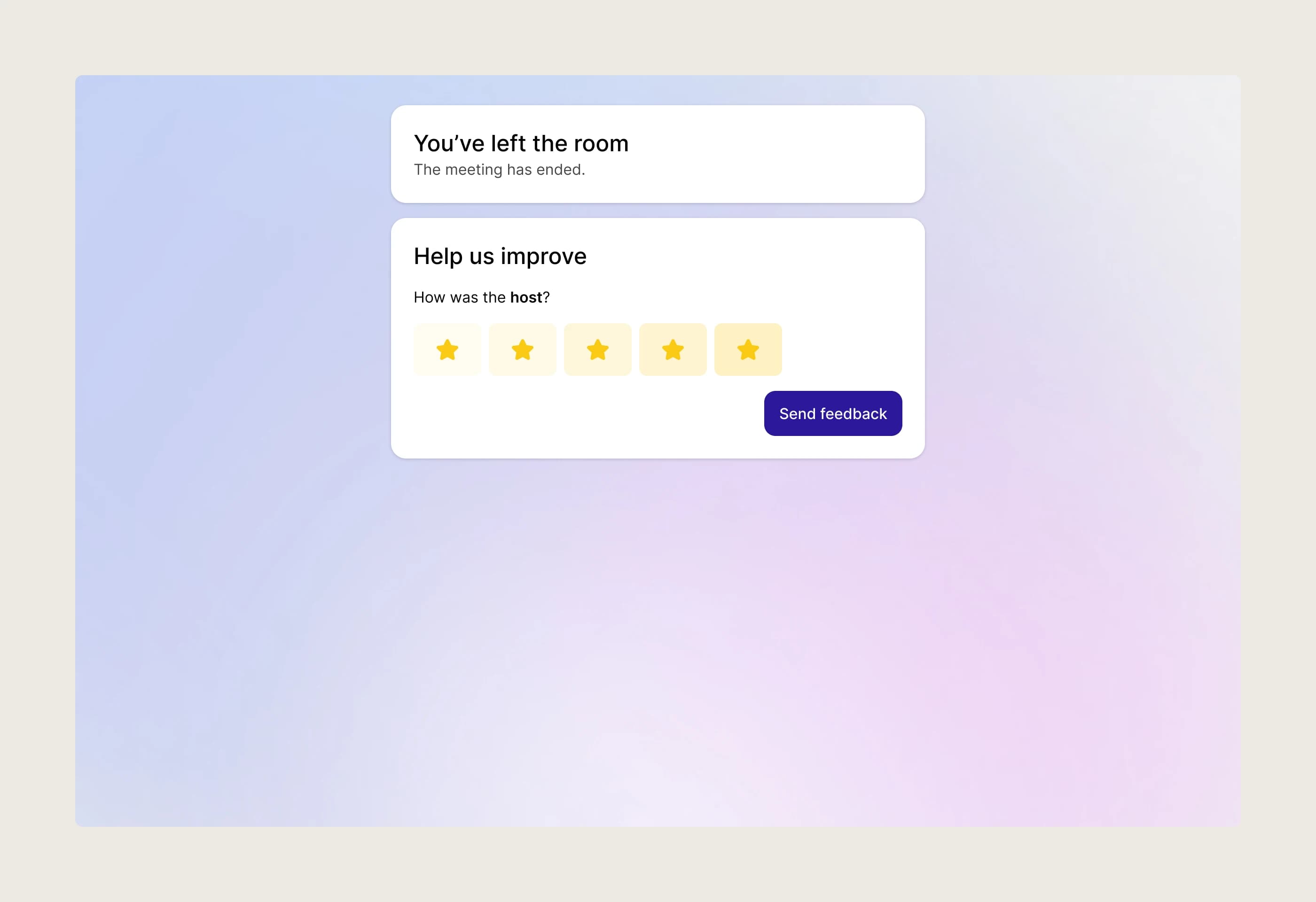
We also decided happy users weren't the point of this flow, so we fast-tracked four and five stars. Our attention was on the unhappy ones — three stars and below. A short list of labels helped them name the frustration quickly, with an input field for anyone who'd rather use their own words. The prototype ran two of these: one rating for the call, one for the host.
A Floor, With Headroom
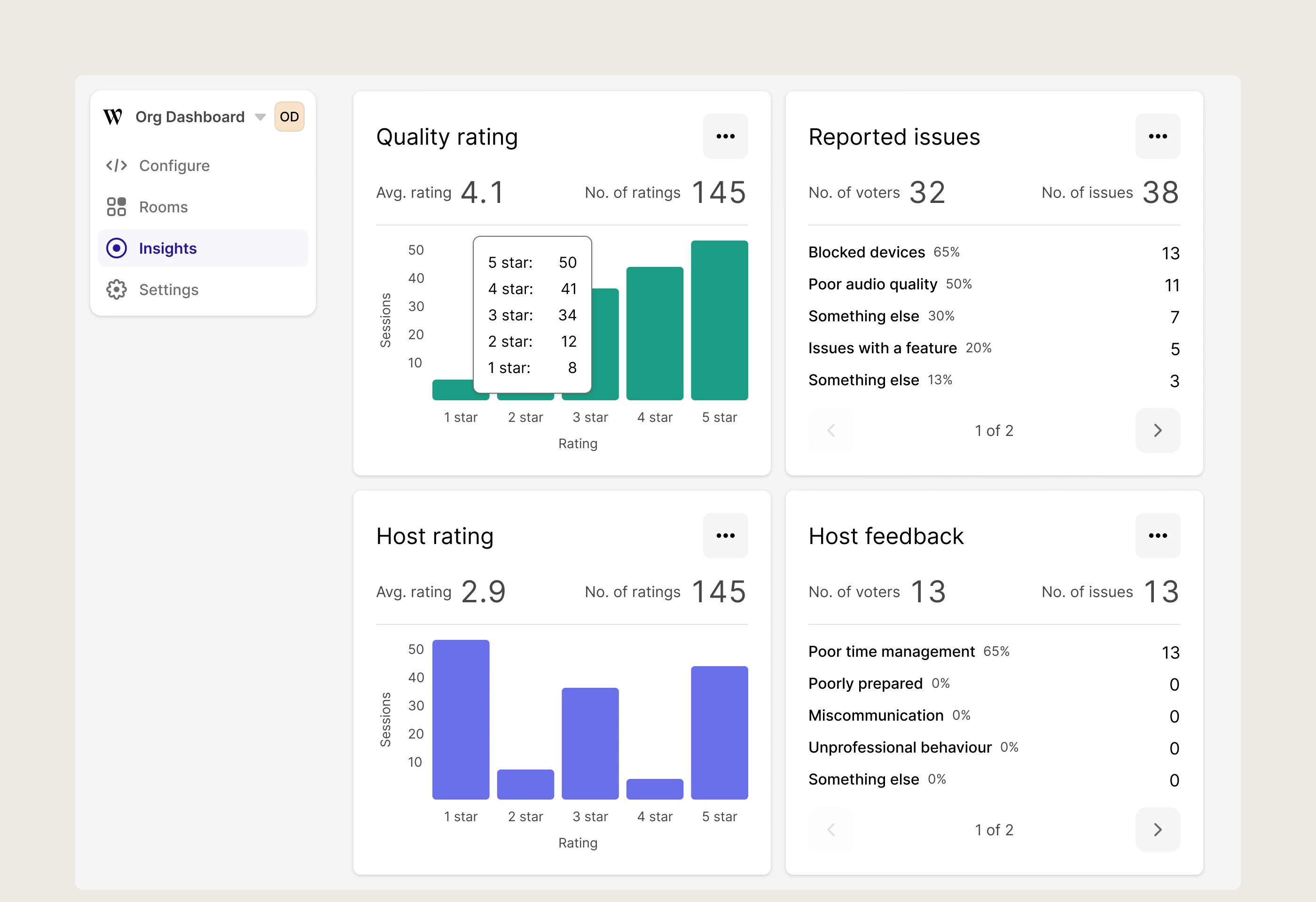
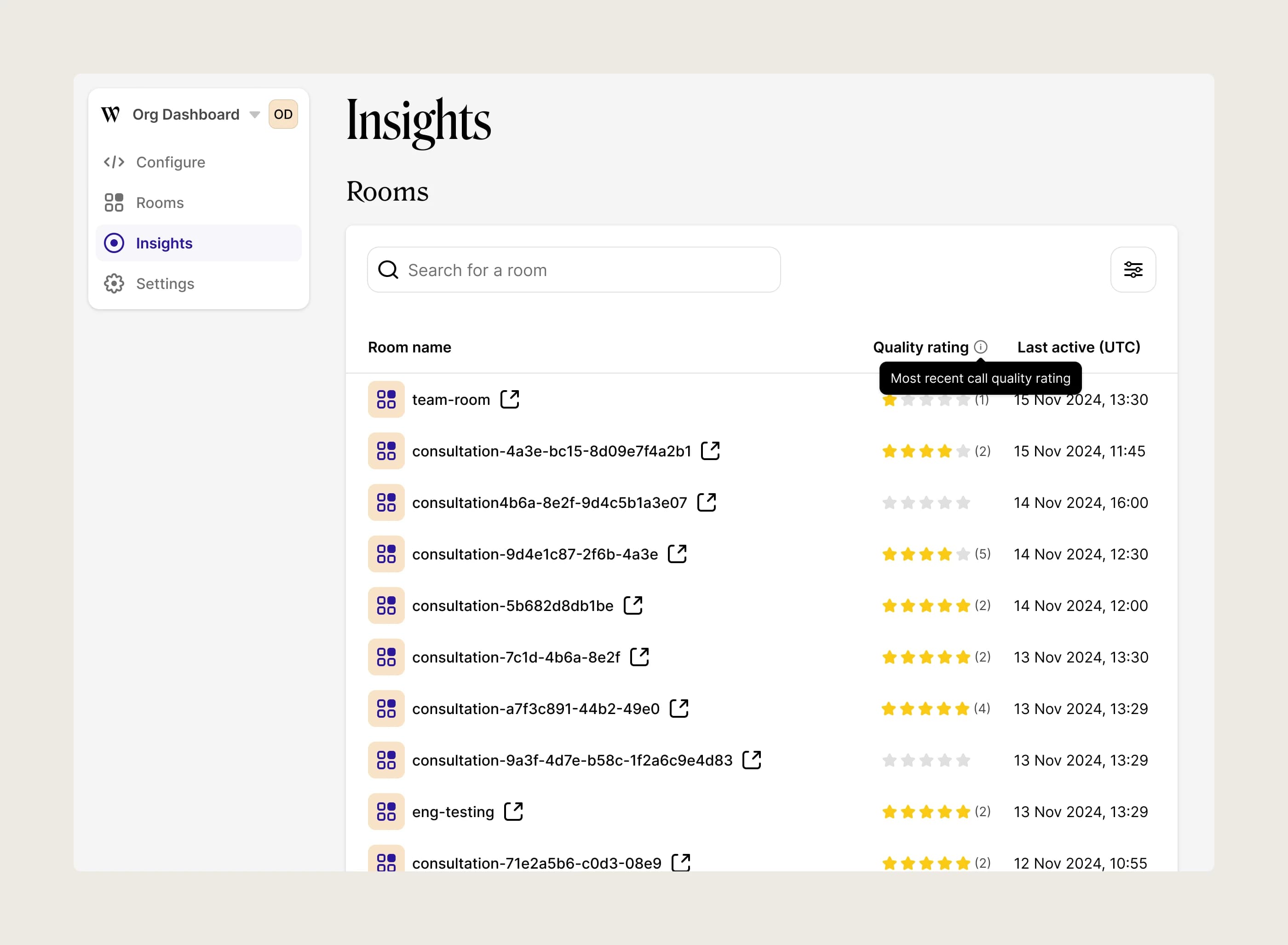
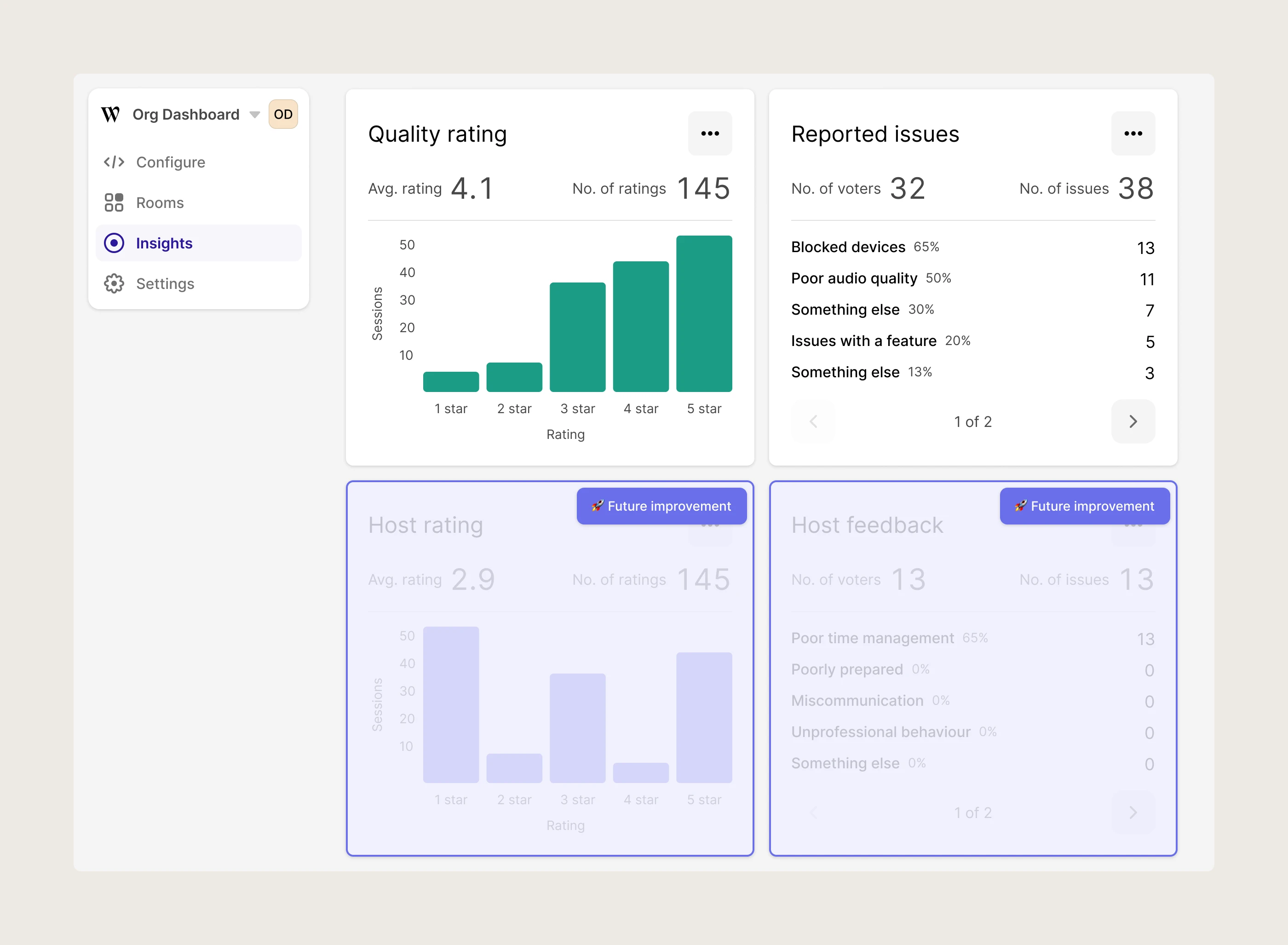
Customers who'd see value in this feature had no real feedback system before this, and that shaped the dashboard. An average score overall is already a big step up from nothing. But customers could navigate their way through ratings per room, per session and per user to discover the depth required.
We left the fancier stuff out — weighted scoring, custom metrics, customer-defined tags. It was better to build a floor people can stand on first. Whilst that complexity is useful, it seemed like the next phase, not this one.
Core First, Control Later
A prototype we put in front of customers included two rating flows: one for call quality, one for host quality. Only one shipped. Call quality worked — the mechanic held up, and so did the list of tags. Host quality was where opinions differed. Each customer wanted it a little differently: a unique list of issues and different ideas about when to surface it. There wasn't a shared answer to design for in a first release.
So we shipped the base feature first and held host feedback back. The core went out focused, reliable and ready to use. Host rating stays firmly in scope — backed by real demand and the research we've already done — and belongs with the more granular controls planned for the next phase. We'll revisit it with a clearer answer.
Beta & Honest Read
We ran a closed beta against clear go/no-go criteria: engagement, conversion, and whether the spread of ratings matched what we already knew about customer sentiment. All three came through cleanly, and the feature has since shipped.
- 64%
- 23%
- 4.6
The honest read: it's working, but I'm watching cadence. We ask after every session, and rating fatigue is a real risk in telehealth — the moment right after a call isn't always the time to ask anything.